Case study / Client engagement, anonymized
Original work, adapted for reuse across the business
A media company published hundreds of original stories a week on its digital side, then paid its print brands to produce similar work all over again. This system lets each print brand start from the work the company already owns.
Deployed; editor launch October 2026- Per-brand voice analysis
- Own content only, verbatim quotes
- ~43¢ a story, measured
The engagement
Challenge
One company, doing the same job twice
On one side of the business, digital brands published hundreds of original, already-approved stories a week. On the other, print brands were producing similar stories again, by hand, to fill their pages. The finished work was the company's own, but it lived only on the public article pages, each print brand writes in its own distinct voice, and the publishing system behind the print side was an enterprise platform with no supported way in.
Action
Adapt what it already owns, and let each brand's editors finish it
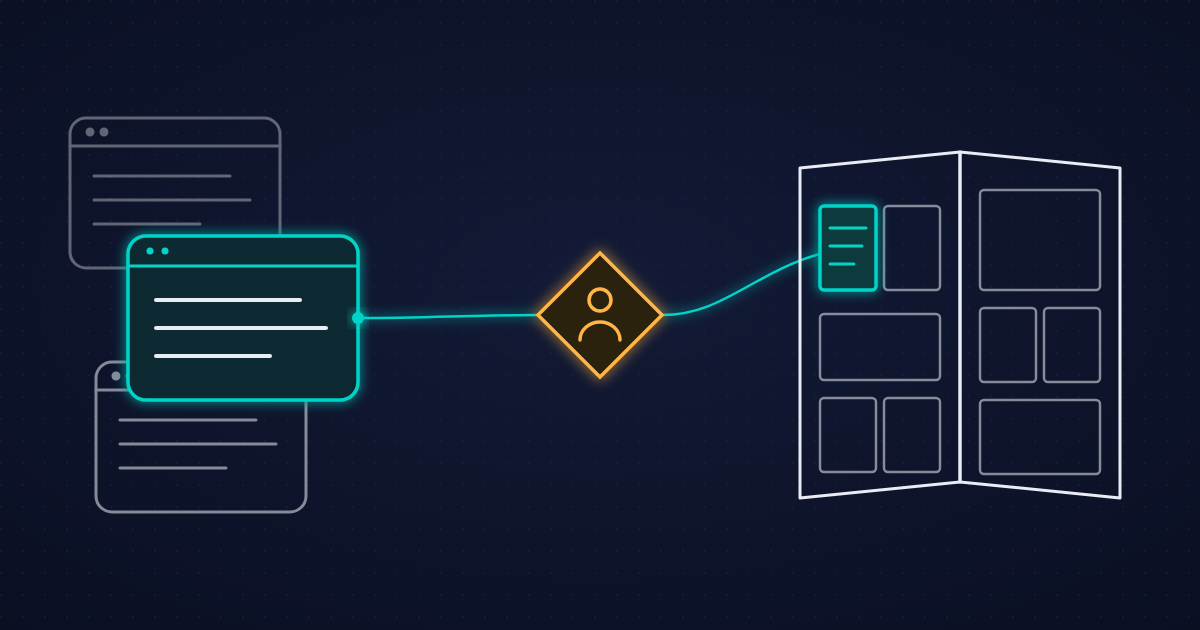
I started with an AI style analysis of each brand's published writing, which became a voice profile per brand that makes the differences between them explicit. The system, built in the client's own AWS account, pulls the company's own stories from its brand sites as they publish. An editor picks a story and a real page from the print brand's InDesign layouts. Claude, running on Amazon Bedrock under the client's own IAM with no API key, adapts the story to that brand's voice and to the measured space on that page. The brand's editor reviews and finalizes every story, applying their expertise to a strong draft instead of a blank page. A few clicks then drop it into the existing publishing system and onto the InDesign page, and the rest of production runs exactly as it did before.
Result
Live end to end, measured, and launching to the print editors
Every piece is deployed and has been proven with real sends into real InDesign pages, on production and on a staging stack that mirrors it. Cost is measured from billing, not estimated: about 43 cents a story, nearly all of it model spend, with fixed infrastructure under $7 a month. Editors on the first print brand start in October 2026, with the others following. The goal is a finished story in five minutes of editing instead of 45, and that number stays a target until it is measured in use.
How it is built
Owned work in, finished page out, an editor in between
The model never decides what runs. An editor picks the story and the page, and finalizes every word before anything reaches the publishing system.
- 01Voice profiles from style analysis. An AI analysis of each brand's published writing produced a profile of its voice, so the same story adapted for two brands reads like two brands.
- 02Own content only. The system only accepts stories from the company's own brand sites, and any quoted passage must appear verbatim in the source or approval is blocked. Adapting the voice is the model's job; inventing a quote is blocked in code.
- 03Space measured, not guessed. Each page frame's capacity is measured by sending calibration copy into the real templates and reading the overflow back, then remembered per template, so the draft aims at the space it actually has.
- 04Least-privilege access. Every read from the publishing system runs as a read-only identity. The one write path, the handoff to the next desk, runs as a separate, narrowly scoped identity held by a single function.
- 05Deploys that are never the go-live. Every outward-facing behavior sits behind a stack parameter, a staging stack mirrors production, and about a thousand automated tests gate every deploy, so shipping code and switching on a pipeline are separate decisions.
What it proves
Reusing what a company already owns is the business case. The AI adaptation is the easy part; the voice profiles, the guardrails and the handoff into the existing workflow are what make it safe to put in front of editors.
See the rest of the work →A consulting engagement, anonymized: no client, brand, publication type or people names. The time saving is a target under measurement, not a result, and this page will be updated once editors are using it in production.