Case study / Enablement engagement, anonymized
I built the tool. Then I taught the newsroom to build their own
A round of layoffs eliminated the copy desk, and editors were told they now owned their own copy editing. Nobody was given a tool or an hour of training. This engagement is what the missing half of AI adoption looks like when somebody actually does it.
Adopted; staff built derivative versions- Style-guide grounded
- Self-scoring evals
- Staff-built derivatives
The engagement
Challenge
The copy desk was gone. The tooling and training were not coming
When a round of layoffs eliminated the copy desk, editors were told they now owned their own copy editing, with no tool and no training. The licenses already existed: within days of getting my Okta dashboard at the newly merged company, I had inventoried the enterprise AI tools we were licensed for and started building in them. The gap was never the technology. It was that nobody was turning licenses into working tools and working skills.
Action
Build the tool, prove it honestly, then teach the building
I built editors at a national weekly magazine a copy-edit app inside the company's enterprise AI platform, grounded in the publication's own style guide, and deployed it internally. For the newspaper staff I built prototype versions that ran limited beta tests. And because trusting my own impression of an AI tool is not verification, I built self-scoring evaluation systems that tested these tools against known-good edits. Then the part most rollouts skip: I taught staff how I built it and how to build their own.
Result
The enablement outlasted the tool
People started creating tweaked versions for their own desks. Word spread, and I became the person staff found with questions from basic prompting to whether AI could take on a whole project, including the one question every enterprise needs answered correctly: which tasks belong in which sanctioned tool, and why the data security answer decides it. The tool was deliberately simple; it was early 2025 and the models were a generation younger. What lasted was the habit of reaching for AI, the judgment about where it is safe, and the confidence to build rather than wait.
How it is built
Tool first, then the skill to rebuild it
The newspaper prototypes ran limited beta tests, and that is the claim. Honest status labels are part of the enablement.
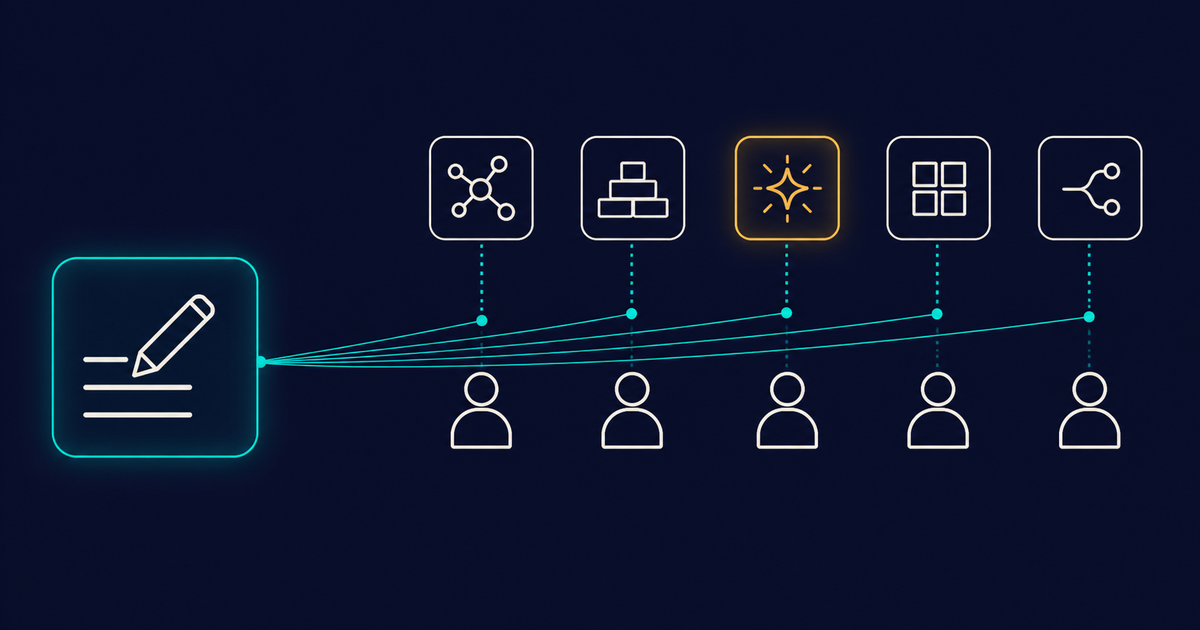
- 01Style-guide grounding. The copy-edit app enforced the publication's own style guide, not a generic one, inside the company's sanctioned enterprise AI platform.
- 02Self-scoring evaluation. Automated evals tested the tools against known-good edits, replacing my own impression with a measured answer.
- 03Newspaper prototypes. Adapted versions for the newspaper staff ran limited beta tests. Limited betas is the claim; they were not rolled out.
- 04Teaching the build. I walked staff through how the tool was made and how to make their own, and they did, tweaked per desk.
- 05Tool-routing judgment. The recurring question was which tasks belong in which sanctioned tool. The data security answer decides it, and staff learned to ask it themselves.
What it proves
The enablement outlasted the tool: the habit of reaching for AI, the judgment about where it is safe, and the confidence to build rather than wait.
See the rest of the work →An employer engagement, anonymized: no company, publication, or platform names. Adoption counts and time-savings figures are not claimed because they were not measured. That seed later grew into StyleProof, the productized copy editor and cited fact-checker now verified in a customer's cloud. The product page tells that story. This page is about the people.