Case study / Internal tooling, own build
Sixteen agent sessions. One window, one conductor
Running many AI coding agents means running many terminals, and no terminal app answers the question that matters: which of my sixteen sessions just finished, and which one is stuck waiting for me? Agent Maestro is the answer, built as an operations console rather than another terminal.
Working build, notarized, in daily use- 16+ sessions, one window
- Focus-first, not a grid
- Fails closed on deploys
The engagement
Challenge
Parallel agents turn a desktop into a lost-window problem
Multi-agent development multiplies terminals until finding the right one costs real time every hour. Tabs hide; a tiled grid of sixteen terminals is sixteen unreadable postage stamps. And when agents can touch production, the cost of losing track stops being minutes.
Action
An operations console with a safety model
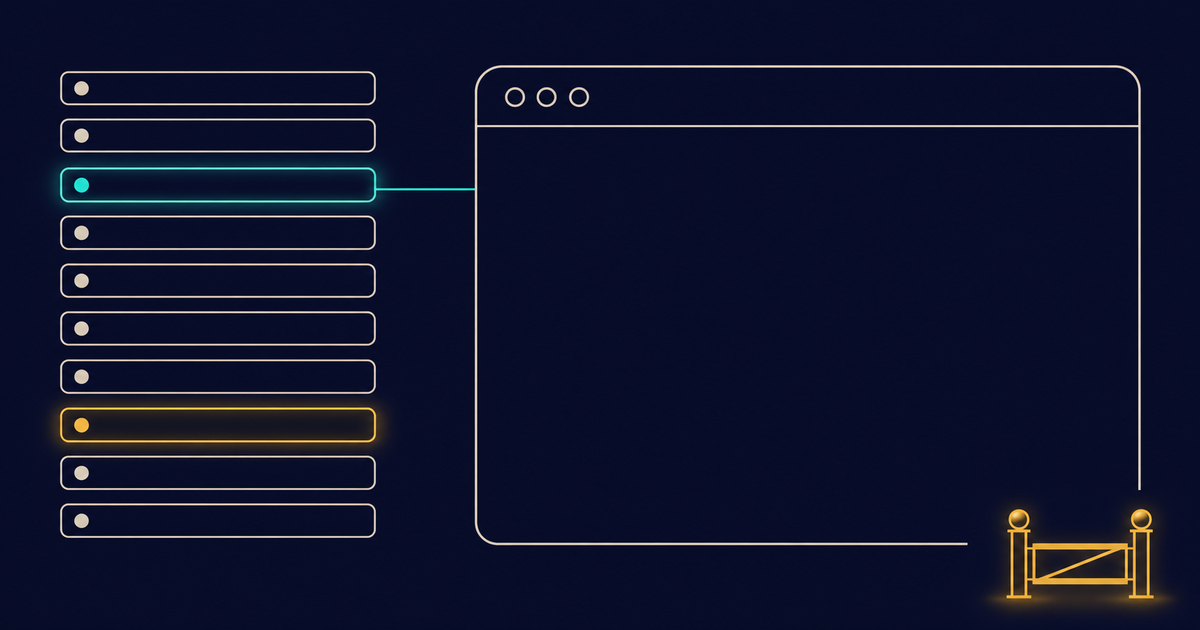
One window: an always-visible session list sorted by who needs attention, one full-size focused session, and instant swap by click or fuzzy switcher. Underneath, a file-based coordination bus with strict role separation, and a governance rule with teeth: automation runs the safe churn, but any task touching client infrastructure stops at a human approval gate and fails closed. Sessions run inside tmux, so quitting the app kills nothing.
Result
The window hunt ends, the guardrails stay
Every session visible, findable, and status-aware in one place, with the highest-stakes actions still gated behind a human click. The build practices what it preaches: it was specified through adversarial design reviews, implemented by subagent teams with per-task security review, and ships as a signed, notarized build with the session model covered by hundreds of unit tests.
How it is built
Attention flows in, approvals flow out
Client-infrastructure deploys never run in the background. They stop at an approval gate and execute foregrounded, in a visible pane, after a human click.
- 01Focus-first layout. One session at full size with an always-visible list, replacing a tiled grid that stops working past a handful of panes.
- 02A pure, tested session model. List order, grouping, focus, and unread state live in a DOM-free unit-tested module; the renderer is a thin view over it.
- 03Hardened spawn contract. The UI can never supply a path or a binary. Every working directory originates in the main process from a validated map, a native dialog, or a recents list.
- 04Coordination bus with role separation. A read-only strategist, a single dispatcher allowed to write assignments, and workers confined to their own repos, coordinated through files. The split is not decorative: every instruction's provenance is checkable against a channel the dispatcher can independently read.
- 05PID-scoped lifecycle. The app only ever kills processes it spawned, tracked by id, never by name, so it can run beside external agent sessions without harming them.
What it proves
The safety model has been tested by reality, not just review: the bus's append-only audit trail records a forged instruction aimed at client infrastructure that the role separation caught and stopped before any agent acted.
See the rest of the work →A personal operations tool. The coordination bus touches client work, so client names and infrastructure details never appear in the app's public materials.